

The Room: Old Sins (Android/iOS): the strongest puzzle-box work in the series
The Room: Old Sins is the entry I still point to when someone asks why this series became the benchmark for tactile mobile puzzlers. It’s not just “more puzzles”: it’s a tightly paced chain of mechanical problems built around a transforming dollhouse, with clue placement that rewards attention rather than guesswork. Even in 2026, it holds up because its design is disciplined—every strange lever, lens, and hidden compartment exists for a reason, and the game rarely wastes your time.
Why the dollhouse structure makes these puzzles hit harder
Old Sins doesn’t treat its setting as decoration. The dollhouse is the organising principle: you’re effectively working inside a puzzle box that keeps reconfiguring itself, with each new area feeding information back into the whole. That means progression feels earned—you’re not “unlocking the next level” so much as understanding how a single intricate object really works.
That structure also improves memory and orientation. When you return to a previously visited space, you’re not lost in a maze of corridors; you recognise surfaces, mechanisms, and the logic that connects them. It’s a small thing on mobile, but it reduces friction and keeps you focused on problem-solving rather than navigation.
The best part is how the game uses physicality as a language. A drawer sticks for a reason. A seam in the wood isn’t just texture. When something looks engineered, it usually is, and that consistency is what lets the later puzzles become more complex without turning unfair.
The “touch-first” design that feels natural on phones and tablets
Old Sins is built around the assumption that your fingers are the tools. Rotating objects, sliding panels, aligning parts, and testing mechanisms all feel like direct manipulation rather than “tap to interact”. That matters because many puzzle games on mobile end up feeling like point-and-click adventures squeezed into a smaller space; here, the gestures are the point.
Clue readability is carefully managed. The game regularly brings your focus close to key surfaces, then uses light, contrast, and motion to nudge your attention—subtle enough that it doesn’t feel like hand-holding, but clear enough that you’re rarely pixel-hunting. When you do get stuck, it’s usually because you’ve missed a relationship between two systems, not because the game hid a single tappable speck.
Audio is part of the feedback loop. Clicks, snaps, and mechanical whirs confirm that you’ve done something meaningful, while the atmosphere builds tension without rushing you. If you play with headphones, you notice how often sound functions as confirmation, especially when you’re testing combinations or aligning components.
The puzzle language: how Old Sins stays challenging without feeling random
The strongest puzzles in Old Sins follow a “learn, remix, escalate” pattern. Early on, you learn what a type of mechanism wants from you—how a lens behaves, what a lock suggests, how symbols map to physical parts. Later, the game remixes those ideas, asking you to apply the same reasoning under different constraints.
Importantly, the puzzles are usually multi-step but not multi-guess. You’ll often collect partial information from one interaction, then apply it elsewhere, then return with a new tool or insight. That loop keeps the pace brisk and makes breakthroughs feel satisfying because you can explain, in plain words, why the solution works.
The narrative is used as glue rather than distraction. The mystery provides motivation to keep pulling at threads, but the game doesn’t rely on huge exposition dumps. Instead, story elements often arrive as objects, notes, or environments—things you can interpret while you’re already in “investigation mode”.
Common sticking points, and how to think your way through them
If you hit a wall, start by changing your viewpoint rather than brute-forcing inputs. Old Sins frequently hides solutions in plain sight but from a different angle or at a different zoom level. Rotate the object slowly, look for seams, and pay attention to parts that look manufactured rather than ornamental.
Next, treat symbols as instructions, not decoration. The Room series loves systems where a pattern is telling you an order of operations, a sequence, or a mapping between components. If a symbol repeats across different objects, assume it’s a shared language, and try to find what physical action it’s tied to.
Finally, keep a mental list of “open loops”. If you’ve found a key-like item but no obvious lock, don’t assume you missed something tiny; assume the lock hasn’t revealed itself yet. The game often shows you the destination after you’ve learned the mechanism, so holding unresolved items in mind can prevent circular wandering.
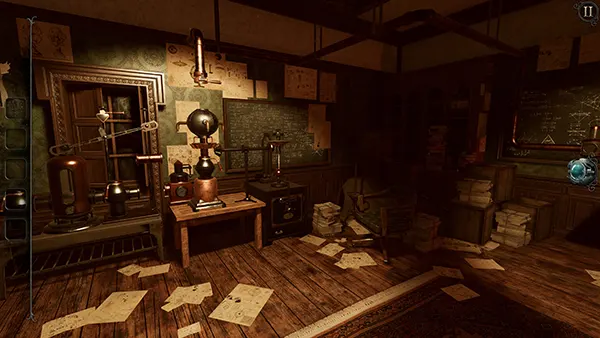
Why these are the series’ strongest puzzles, even in 2026
Old Sins benefits from experience: Fireproof Games clearly understood what worked in earlier entries and trimmed the excess. The pacing is especially good. You’re rarely stuck in a long stretch of pure busywork; instead, the game alternates between discovery, manipulation, and “aha” moments at a rhythm that keeps your attention steady.
The craftsmanship is also more consistent than in some earlier instalments. There are fewer puzzles that feel like they exist purely to slow you down. Most are either teaching you a rule, testing your understanding of that rule, or using it to reveal something new about the dollhouse’s design.
It’s also a great example of difficulty that respects the player. You’re encouraged to be observant, to experiment, and to connect ideas—but you’re not expected to guess wildly. That’s why it remains one of the safest recommendations for anyone who likes escape-room logic but wants a more polished, story-driven experience on mobile.
Practical notes: accessibility, hints, and what to expect on modern devices
The hint system is there if you need it, and the key is to treat it as a nudge rather than an answer key. If you use a hint, pause and work out what it implies about the puzzle’s logic—doing that preserves the satisfaction while preventing frustration from turning into a quit moment.
On modern iOS and Android devices, the game’s touch interactions still feel precise, and its interface choices age well because they’re minimalist. The most helpful “settings” decision is personal rather than technical: choose a comfortable play session length. Old Sins rewards focus, and shorter sessions can make pattern recognition sharper.
If you’re new to The Room, Old Sins is a strong starting point because the story stands on its own and the puzzle language is taught cleanly. If you’ve played the earlier games, it’s still worth revisiting: many of its best moments come from how confidently it builds layered mechanisms without turning the experience into homework.
Popular articles
-
 Eversoul — Gacha Mechanics and Team Develo...
Eversoul stands out among modern mobile RPGs …
-
 Nintendo Switch 2 mouse controls: can Joy-...
The upcoming Nintendo Switch 2 introduces a …
-
 Brawl Stars: How to Rank Up Faster by Choo...
Ranking up in Brawl Stars in 2026 …