

Eversoul — Gacha Mechanics and Team Development in a Mobile RPG
Eversoul stands out among modern mobile RPGs by combining collectible character systems with tactical team-building decisions. Rather than relying purely on luck, the game encourages players to understand mechanics, optimise resources, and build synergy between characters. As of 2026, its systems have matured with regular balance updates, new heroes, and expanded progression paths, making it a solid example of how gacha-driven design can remain engaging over time.
How Gacha Mechanics Work in Eversoul
The summoning system in Eversoul revolves around collecting Souls, each belonging to distinct factions such as Humanlike, Beast, Fairy, Undead, and Angel/Demon. The probability rates are transparent and follow modern industry standards, with featured banners offering increased chances for specific characters. This allows players to plan their pulls rather than rely entirely on randomness.
A key element is the mileage system, where repeated summons gradually guarantee a high-tier character. This mechanic reduces frustration and gives long-term players a clear progression path. Events and seasonal banners further expand the roster, often introducing limited characters with unique abilities.
Currency management plays a major role. Players earn Everstones through missions, events, and idle rewards, and deciding when to spend them is part of the strategic layer. Saving resources for high-value banners is often more effective than frequent low-impact pulls.
Understanding Drop Rates and Banner Strategy
Drop rates in Eversoul are structured to balance accessibility and rarity. While Epic Souls are not excessively rare compared to older gacha titles, building a full team still requires planning. Duplicate characters are also important, as they contribute to ascension and unlock higher level caps.
Banner rotation is predictable, allowing experienced players to anticipate future releases. This creates a meta where patience is often rewarded. Players who track updates and developer announcements can allocate resources more efficiently.
Another important detail is the inclusion of selective summon systems early in the game. These allow players to reroll or choose strong starting units, reducing early-game difficulty and improving long-term progression.
Team Building and Combat Synergy
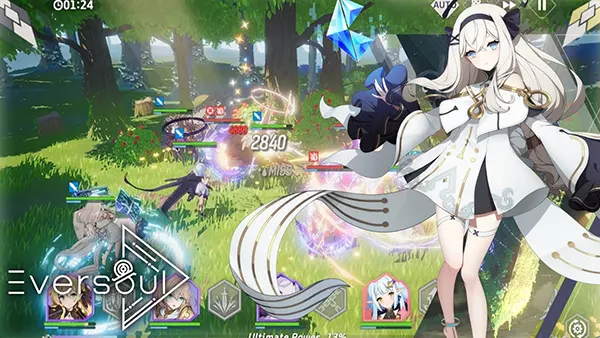
Combat in Eversoul is not purely automated despite its idle elements. Positioning, faction bonuses, and skill timing all influence outcomes. Teams typically consist of five characters, and their placement on the battlefield determines survivability and damage output.
Faction synergy provides passive bonuses when multiple characters from the same group are used. However, mixed teams are often more effective due to complementary skills. For example, pairing a tank from one faction with damage dealers from another can produce better results than stacking a single type.
Role distribution is essential. A balanced team usually includes a front-line defender, one or two damage dealers, a support unit, and a healer. Ignoring this structure often leads to stalled progression in later stages.
Optimising Roles and Skill Interactions
Each Soul has active and passive abilities that interact with others. Some characters boost allies’ attack speed, while others reduce enemy defence or provide shields. Understanding these interactions is key to building an efficient team.
Ultimate skills, triggered during combat, can change the outcome of battles. Timing these abilities—especially in boss fights or PvP—requires attention, even in an otherwise idle system.
As of 2026, balance updates have made underused characters more viable. This means players are not forced into a single meta but can experiment with different combinations depending on available resources.
Progression Systems and Resource Management
Character progression in Eversoul goes beyond simple levelling. Ascension, gear upgrades, and relationship systems all contribute to a character’s effectiveness. Duplicate Souls are required for higher ascension tiers, which ties progression back to the gacha system.
The level sync system allows players to maintain multiple characters without excessive grinding. By linking lower-level units to the highest-level characters, the game reduces resource waste and encourages roster diversity.
Idle rewards remain a core mechanic. Even when offline, players accumulate resources needed for upgrades. This makes the game suitable for both casual sessions and more strategic, long-term planning.
Efficient Growth Without Overspending Resources
One of the most common mistakes is spreading resources too thin across multiple characters. Focusing on a core team of five to seven Souls ensures steady progress and avoids bottlenecks in materials.
Event participation is critical. Limited-time activities often provide rare upgrade materials and summoning currency, significantly accelerating progression without additional spending.
Finally, relationship mechanics add another layer. Increasing affinity with characters unlocks stat bonuses and story content, offering both gameplay advantages and narrative depth. Players who invest time in this system gain a measurable edge in difficult stages.
Popular articles
-
 Star Wars Zero Company: How XCOM-Style Tac...
Star Wars Zero Company takes a very …
-
 OCuLink vs Thunderbolt 5: Which Interface ...
External graphics have become far more relevant …
-
 PRAGMATA: How Shooting and Hacking Reshape...
Released on 17 April 2026, PRAGMATA places …