
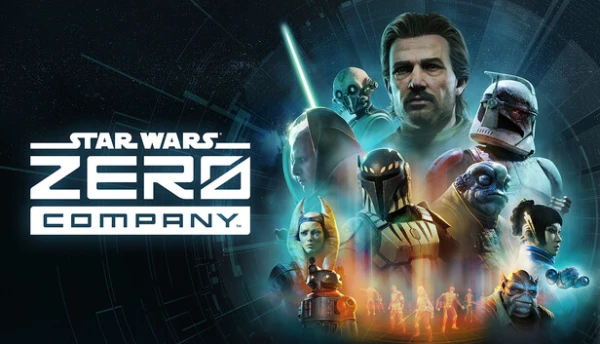
Star Wars Zero Company: How XCOM-Style Tactical Battles Work in Star Wars
Star Wars Zero Company takes a very different approach from the lightsaber duels, space battles and fast third-person combat usually associated with modern Star Wars games. Released on 27 August 2026 for PC, PlayStation 5 and Xbox Series X|S, Bit Reactor’s single-player game puts the player in command of a small team operating during the final stages of the Clone Wars. Battles unfold turn by turn, with movement, cover, firing positions and squad composition carrying more weight than quick reactions. The resemblance to XCOM is easy to recognise, but Zero Company uses those familiar tactical foundations to tell a distinctly Star Wars story built around specialised operatives, changing relationships and missions fought far from the main fronts of the war.
How Turn-Based Combat Works in Star Wars Zero Company
The basic rhythm of Zero Company is built around alternating turns. During the player’s turn, every active Operator can move, attack or use specialised abilities before control passes to the opposing side. Each squad member normally receives three Action Points, commonly shortened to AP, and almost everything that happens on the battlefield consumes some of them. Moving a short distance may leave enough AP for an attack afterwards, while crossing a larger section of the map can use most of an Operator’s available actions. This creates an immediate tactical question every round: is it better to reach an ideal position now, or remain closer to the current location and preserve enough AP to shoot, use equipment or prepare a defensive action?
This Action Point system gives battles considerably more flexibility than a simple formula in which every character receives one movement action and one attack. Operators can spend their available AP in different ways according to what is happening around them. A soldier might move into cover and fire, while another character could remain stationary, use an ability and then prepare Overwatch. Utility equipment such as grenades and medical items also competes for the same limited resources. Because members of the squad share the player’s overall turn rather than acting in a rigid sequence, their actions can be arranged to support one another. One Operator can weaken an enemy position before a second character moves in to finish the job.
The similarities with XCOM become particularly clear in the importance of positioning. Zero Company rarely rewards simply placing every character within weapon range and exchanging fire. Distance, weapon type, line of sight, elevation and enemy cover all influence how effective an attack is likely to be. The interface provides a percentage-based Chance-to-Hit before a shot is taken, giving the player a practical indication of the risk involved. A poor firing angle can therefore turn a powerful weapon into an unreliable choice, while moving several metres to the side may expose an opponent and create a much stronger attack. The result is combat that constantly encourages players to think about the battlefield itself rather than treating every encounter as a straightforward damage contest.
Cover, Overwatch and the Importance of Positioning
Cover is one of the most important defensive tools in the game. Zero Company distinguishes between partial and full cover, with full cover providing greater protection against incoming attacks. Ending a turn in the open can leave even a strong Operator vulnerable once the enemy begins to act, so movement usually needs to be planned around walls, machinery, containers and other parts of the environment. Cover is not permanent protection, however. Some positions can be destroyed during combat, and enemies can move around them to create better firing angles. A safe location at the beginning of a fight may therefore become dangerous only a few turns later.
Flanking gives players a reason to keep moving instead of settling into a single defensive line. An enemy protected from the front may be considerably easier to hit once another Operator reaches its side. Higher ground can also improve the attacking position in suitable situations. These mechanics make squad spacing important. Keeping everyone close together can simplify mutual support, but it also limits the directions from which the squad can threaten an enemy position. Spreading out creates new angles and opportunities, although doing so can leave an isolated Operator without immediate assistance. Good positioning is therefore less about finding one perfect square on the map and more about maintaining several useful options for the next turn.
Overwatch adds another layer to that decision-making. An Operator placed on Overwatch can react during the enemy turn when a valid target moves through the relevant area. It is useful for protecting a route, covering a squad member who has moved forward or discouraging an enemy from leaving cover. Setting up Overwatch ends that Operator’s turn, so timing matters. Using it too early may waste AP that could have been spent on a more immediate action, while saving it until the end of the turn can create a defensive response to whatever the enemy attempts next. This emphasis on controlling space is one of the reasons Zero Company feels recognisably similar to established squad-tactics games without becoming a direct copy of them.
How Zero Company Turns Tactical Systems into Star Wars
The major difference between Zero Company and a conventional modern military tactics game is the range of characters available to the squad. The team is not restricted to soldiers carrying variations of the same equipment. Players can work with character types drawn from across the Star Wars universe, including clone troopers, scoundrels, Mandalorian fighters, astromechs and Force-sensitive characters. Hawks, the former Republic officer who leads Zero Company, can also be customised in appearance and combat specialisation. This variety matters mechanically because different characters solve battlefield problems in different ways rather than simply providing higher or lower statistics.
The setting also allows the game to use weapons and abilities that fit naturally into tactical combat. Blasters reward careful management of range and line of sight, while close-combat specialists need safe routes through the battlefield before they can reach their targets. Grenades and other utility equipment can disrupt groups of enemies or force opponents away from protected positions. A Jedi changes the possibilities again because a character built around close-range combat and Force abilities does not need to approach a situation in the same way as a conventional ranged Operator. The important point is that Star Wars elements are tied to tactical functions rather than being present only as visual decoration.
Enemy encounters are designed around this same principle. Zero Company is set in the twilight of the Clone Wars, but its story is not simply another series of Republic-versus-Separatist battlefield engagements. Hawks and the squad become involved in a covert conflict centred on the Infinite Coil, a Separatist-aligned organisation led by Kundri Fathom. Republic Intelligence recruits Zero Company to deal with a threat connected to the Shadow Plague, moving the campaign towards clandestine operations and smaller engagements rather than enormous frontline battles. That scale suits turn-based tactics well because a handful of individual characters can remain important even while the story is taking place against the background of a galaxy-wide war.
Why Squad Composition Matters More Than Raw Firepower
Choosing who enters a mission is an important part of preparation. Operators have different strengths, equipment and combat roles, so the most powerful individual character is not automatically the most useful person for every assignment. A mission involving exposed long-range engagements may favour one combination, while an operation built around tighter spaces or defending an objective can reward another. Players therefore need to consider what the mission is asking them to do before selecting the squad. Combining complementary abilities usually gives the team more answers when the original plan stops working.
Zero Company also places unusual emphasis on relationships between squad members. Operators who repeatedly serve together can develop bonds, and stronger relationships can unlock combat synergies. This means two characters are not defined only by their individual skill trees or equipment. Their history together can eventually influence what they are capable of doing as a pair. The system gives a practical purpose to keeping certain Operators together, but it can also encourage experimentation. Taking different combinations on missions may create relationships that would never develop if the same four characters were selected every time.
These bonds help connect the tactical layer to the game’s narrative. Zero Company is deliberately presented as a collection of people from very different backgrounds rather than a uniform military unit. Some are established authored characters with defined personalities, while the wider roster can also include customised recruits. Sending particular people into danger together gives their relationships a context that would be missing if character development existed only in conversations at headquarters. The squad that emerges over the course of a campaign can therefore reflect the player’s choices both mechanically and narratively, which gives individual missions consequences beyond receiving new equipment or experience.
What Happens Between Tactical Missions
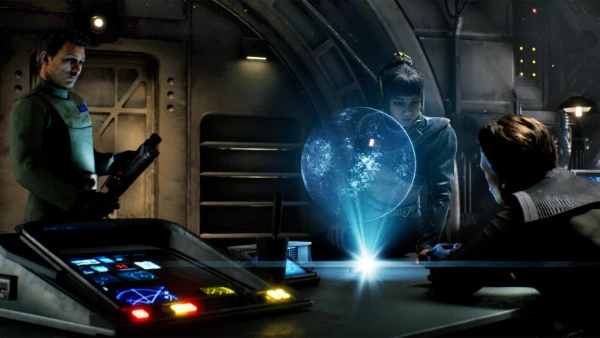
Combat is only one part of the campaign. Between operations, Zero Company returns to The Den, its base on the Ring of Kafrene. This location functions as the organisational centre for the group, giving players space to prepare their Operators and make decisions about where the company should act next. A galaxy map connects the base to missions and strategic tasks across different locations. Confirmed destinations include places already established elsewhere in Star Wars fiction, such as Vandor, Mapuzo and Serolonis, alongside locations that support the game’s original storyline. The structure gives the campaign a wider geographical scale without turning every journey into a large open-world sequence.
Mission selection has consequences beyond choosing the next battlefield. Bit Reactor built the campaign around decisions that can affect later events, including the relationships and possible fates of characters. That makes the strategic layer more personal than a simple list of increasingly difficult missions. Spending time developing cooperation between two Operators, for example, can influence their bond and potentially matter later in the story. The game therefore connects tactical decisions, character relationships and campaign progress rather than treating them as completely separate systems.
Preparation at The Den also gives players time to adapt the squad before another operation begins. Hawks can be shaped through different combat specialisations, while recruited Operators can be equipped and developed according to their role. Players can adjust load-outs and abilities instead of permanently committing the entire team to one approach. That flexibility becomes important as missions introduce different objectives and enemy arrangements. A squad designed entirely around aggressive short-range attacks may dominate one encounter but struggle when the next mission demands careful movement, protection of an objective or control of several approaches at once.
Permadeath, Campaign Choices and the XCOM Comparison
One of the clearest connections with the harsher tradition of tactical games is optional permadeath. Players choose campaign settings when beginning a new game, including whether permanent character death is enabled. With permadeath active, losing an Operator can have consequences that continue beyond the current battle instead of disappearing after a reload or automatic recovery. Players who prefer a less punishing campaign can leave the setting disabled. The choice is important because it changes how risk is perceived: a dangerous flank becomes far more serious when the person making it may be permanently lost.
Zero Company also includes a Beskar Mode for players who want decisions to carry even greater weight. In this mode, the campaign uses a single save and manual saving is unavailable, making it much harder to reverse an unwanted result simply by returning to an earlier point. This is not necessary to understand or enjoy the tactical system, but it shows how strongly the game can lean into consequences for players who want that experience. Combined with permadeath, it can turn an apparently routine mission into a genuine test of judgement because mistakes may remain part of the campaign rather than becoming temporary setbacks.
Calling Star Wars Zero Company an XCOM-style game is therefore useful, but it describes only the starting point. The shared language is clear: turn-based squad combat, percentage-based attacks, cover, flanking, Overwatch, specialised soldiers and the possibility of permanent losses. Zero Company builds on that framework with a three-Action-Point system, Star Wars character archetypes, relationship-based combat synergies, a covert Clone Wars story and campaign decisions tied to an established galaxy. Its strongest connection to XCOM is not any single mechanic. It is the idea that a battle is won before and after the trigger is pulled, through positioning, preparation and decisions whose consequences may still matter several missions later.
Popular articles
-
Star Wars Zero Company: How XCOM-Style Tac...
Star Wars Zero Company takes a very …
-
 OCuLink vs Thunderbolt 5: Which Interface ...
External graphics have become far more relevant …
-
 PRAGMATA: How Shooting and Hacking Reshape...
Released on 17 April 2026, PRAGMATA places …