
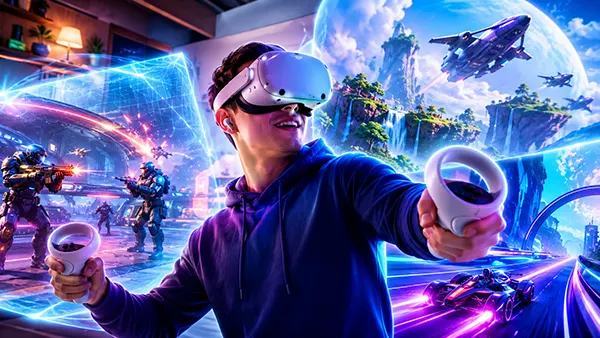
XR Headsets of the Next Generation: Are AR and VR Devices in 2026 Ready for Full Gaming?
Extended Reality technology has moved far beyond the experimental stage. By 2026, modern XR headsets combine virtual reality, augmented reality and mixed reality capabilities within a single device, offering higher image quality, more accurate tracking and significantly improved comfort. Major manufacturers such as Meta, Apple, Sony, HTC, Pimax and Samsung continue to invest heavily in XR ecosystems, while game developers increasingly release titles designed specifically for immersive environments. The key question is no longer whether XR technology works, but whether current hardware is capable of replacing traditional gaming devices for a large number of players.
Hardware Improvements That Changed XR Gaming
One of the most noticeable developments in 2026 is the significant increase in display quality. Premium XR headsets now offer resolutions approaching or exceeding 4K per eye, reducing the screen-door effect that previously distracted users. Micro-OLED and advanced LCD panels provide deeper contrast, improved brightness and more natural colour reproduction, making virtual environments appear considerably more realistic than they did only a few years ago.
Processing power has also improved. Modern standalone XR devices integrate advanced chipsets capable of handling complex graphics without relying on a gaming PC. Cloud rendering technologies supplement local processing when required, allowing developers to create larger and more detailed virtual worlds while maintaining stable performance.
Comfort remains a critical factor for long gaming sessions. Manufacturers have reduced headset weight, improved weight distribution and introduced more efficient cooling systems. Battery efficiency has also advanced, enabling several hours of gameplay without the need for frequent recharging.
Tracking Accuracy and Player Interaction
Hand tracking technology has matured considerably by 2026. Players can now interact with virtual objects using natural hand movements with minimal latency. While controllers remain important for many game genres, hand tracking has become a practical option for strategy, simulation and social experiences.
Eye-tracking systems are increasingly common in mid-range and premium devices. These sensors allow foveated rendering, which allocates processing resources to the area where the player is actually looking. As a result, image quality improves while hardware requirements are reduced.
Body tracking has also become more accessible. Additional sensors and AI-powered motion prediction create more realistic character movement inside games. This advancement benefits multiplayer experiences, where accurate physical representation contributes to communication and immersion.
Game Libraries and Content Availability in 2026
Hardware alone cannot guarantee success. The availability of high-quality content remains one of the most important factors influencing XR adoption. In 2026, the gaming catalogue is considerably stronger than it was during the early years of consumer VR. Players can access large-scale role-playing games, competitive shooters, racing simulators, sports titles and social experiences developed specifically for XR environments.
Major publishers have become more willing to support immersive gaming. Several franchises that were once available only on consoles and PCs now offer dedicated XR editions. These releases often include redesigned interfaces, enhanced interaction systems and gameplay mechanics built around spatial awareness.
Cross-platform functionality has further expanded the audience. Many multiplayer titles now allow XR users to play alongside PC and console gamers. This reduces fragmentation and helps maintain healthy player populations, particularly in online games that depend on active communities.
Challenges Still Affecting XR Content
Despite significant progress, some limitations remain. Developing high-quality XR games often requires larger budgets and specialised expertise. Smaller studios may struggle to produce experiences comparable to major releases, which can affect the diversity of available content.
Motion sickness has not disappeared entirely. Although modern displays offer higher refresh rates and lower latency, certain players continue to experience discomfort during fast movement or extended sessions. Developers frequently implement comfort settings to address these concerns, but individual tolerance still varies.
Another challenge involves user expectations. As XR hardware becomes more advanced, players increasingly expect deeper gameplay, larger worlds and longer campaigns. Meeting these expectations requires substantial investment and technical resources.
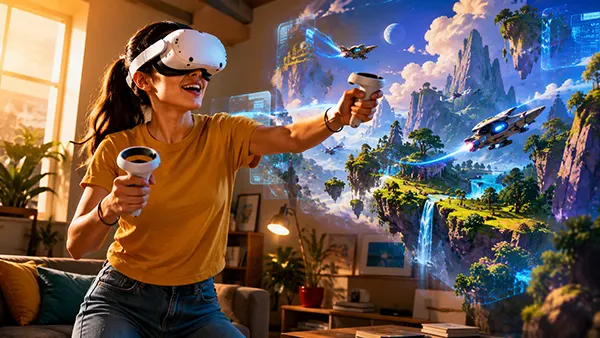
Can XR Devices Replace Traditional Gaming Platforms?
For some players, XR headsets already serve as primary gaming devices. Standalone systems can run a wide variety of games without requiring additional hardware, while mixed reality features allow users to combine digital content with their physical surroundings. This flexibility creates experiences that traditional screens cannot fully replicate.
However, conventional gaming hardware still offers advantages. High-end PCs continue to deliver superior graphical performance, and many competitive players prefer the precision and familiarity of traditional monitors, keyboards and controllers. Certain genres, particularly large-scale strategy games and some esports titles, remain more comfortable on conventional systems.
Cost also influences adoption. Although entry-level XR devices have become more affordable, premium headsets with advanced displays, eye tracking and mixed reality functionality still represent a significant investment for many consumers.
The Outlook for XR Gaming Beyond 2026
The direction of the industry suggests continued growth rather than a sudden replacement of existing gaming platforms. XR technology is increasingly becoming an additional category of gaming rather than a direct substitute for PCs, consoles or mobile devices.
Advances in artificial intelligence, cloud computing and display technology are expected to improve realism, accessibility and content creation. Future headsets will likely become lighter, more efficient and more comfortable, reducing many of the barriers that still affect adoption today.
In 2026, XR gaming is closer than ever to mainstream acceptance. The technology has reached a level where many players can enjoy long, engaging and technically sophisticated experiences. While traditional gaming platforms remain highly relevant, modern XR devices have demonstrated that immersive gaming is no longer a niche concept but a mature and rapidly expanding segment of the interactive entertainment industry.
Popular articles
-
 Star Wars Zero Company: How XCOM-Style Tac...
Star Wars Zero Company takes a very …
-
 OCuLink vs Thunderbolt 5: Which Interface ...
External graphics have become far more relevant …
-
 PRAGMATA: How Shooting and Hacking Reshape...
Released on 17 April 2026, PRAGMATA places …