
PRAGMATA: How Shooting and Hacking Reshape Progression Across the Lunar Station
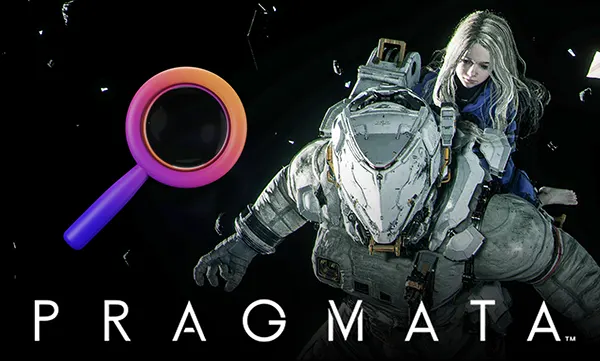
Released on 17 April 2026, PRAGMATA places its entire adventure around a partnership that is mechanical as well as emotional. Hugh Williams carries the firearms, armour and thrusters needed to survive the Cradle, a vast lunar research station overrun by hostile machines. Diana, an android created from Lunafilament, rides with him and reaches systems that ordinary weapons cannot affect. Their abilities are not separate options that happen to share the same screen. Shooting creates the opening for a hack, hacking exposes a target, and movement keeps both characters alive while the process unfolds. That arrangement changes how progress feels from the first encounters onwards. Advancing through the station is not simply a matter of defeating every bot in a corridor. The player must understand which part of the pair can solve the immediate problem, how long it is safe to commit to an action and when a previous route may become useful again. PRAGMATA therefore turns cooperation between two protagonists into the central rule behind combat, navigation and character growth.
Why Combat Requires Hugh and Diana to Act as One
Most enemies in the Cradle are built to resist straightforward gunfire. Hugh can hit them, interrupt certain attacks and remove specific barriers, but their outer armour sharply limits the value of firing without a plan. Locking on gives Diana access to a grid-shaped Hacking Panel. The player draws one continuous route through blue squares, and a completed line damages the target while temporarily opening its armour. A longer route creates a stronger result and keeps the exposed state active for more time. Hugh can then direct his shots into the revealed weak points. This order is important because neither half of the process is sufficient on its own. Hacking without follow-up fire wastes the short opening, while shooting before the target is compromised drains ammunition and prolongs the fight. Even ordinary encounters ask the player to read armour states, position Hugh correctly and prepare the next action before the current one is finished. Progress comes from coordinating the pair rather than favouring only the gun or only the puzzle.
The hacking sequence does not pause the encounter or move the player to a safe interface. Enemies continue to attack while the line is being drawn, so every attempt becomes a decision about risk. A short connection can be completed quickly and may be enough to create a brief opening. A longer connection produces more damage and a wider window for gunfire, yet leaves Hugh exposed for extra seconds. The player can stop, dodge and return to the unfinished task without losing all progress, which makes retreat part of the intended rhythm rather than a failure. This is where the mixture of shooting and hacking changes the usual pace of a third-person action game. Accuracy still matters, but attention must be divided between the battlefield and the panel. The player is constantly judging distance, incoming attacks, the remaining route on the grid and the weapon that should be ready when Diana finishes. Combat becomes a sequence of small, linked choices rather than a test of aim alone.
Some bots deliberately reverse the normal order. Red shield-like barriers prevent Diana from reaching the protected system, forcing Hugh to destroy the shield first. Once it falls, hacking becomes possible and the pair can return to their usual combination. Homing missiles introduce another variation because Diana can take control of them and send them back towards the machine that launched them. These situations prevent the central mechanic from becoming a fixed routine. The correct first action depends on what the enemy is protecting, which attack is already in motion and how much space Hugh has to manoeuvre. The Cradle also uses groups of machines with different roles, so the most dangerous target may not be the one closest to the player. A shielded unit can block access to a more fragile enemy, while a missile user can create an opportunity if its projectile is redirected at the right moment. Moving forward therefore relies on identifying the useful link between gunfire, hacking and enemy behaviour in each room.
How Every Encounter Becomes a Moving Puzzle
Hugh’s arsenal supports this combined design by giving weapons clear jobs rather than treating every gun as a stronger version of the last. The Primary Unit is the dependable option and remains available, while the other weapon categories are more situational and can break after their ammunition is spent. Tactical equipment can pin an enemy down long enough for Diana to complete a demanding hack. Attack Units deliver heavy damage when armour is open, and defensive tools can pull attention away from Hugh or alter the position of a group. The point is not to carry a perfect weapon for every problem. It is to build a sequence in which one action creates time for the next. A player might control a fast bot, start the hack, expose its core and finish it at close range before another machine arrives. Another room may reward saving the strongest unit for a shielded threat. Because temporary weapons are limited, the route through a sector also becomes a question of when to spend power and when to rely on the basic gun.
Hacking Nodes add another layer without turning the system into an overly complicated set of menus. When a node is carried, yellow tiles appear on the Hacking Panel. Connecting those tiles during the route activates an additional effect after the hack succeeds. Decode reduces defence, Multi-Hack passes the effect to nearby targets, and later nodes create further ways to influence a battle. The player must still form a valid path through the panel, but now the most direct line may not be the most useful one. Reaching a yellow tile can justify staying in the interface for longer, especially when a group is positioned closely enough for a shared effect. It can also be a poor choice if an attack is about to land. Nodes are consumed through use, so they encourage judgement rather than constant activation. Their value comes from changing what a successful hack means, not from replacing the basic relationship between Diana opening a weakness and Hugh taking advantage of it.
Boss encounters stretch these ideas across larger spaces and longer attack patterns. A major machine may use several shields, wide area attacks and smaller threats that interrupt the hacking process. The player must create moments of safety instead of waiting for the game to provide them. This may involve breaking one shield, dodging a sweeping attack, preserving a partially completed hack and returning to it when the boss changes position. The same rules used against ordinary bots remain in place, but their timing becomes stricter and their consequences become clearer. That consistency is important for progression. New challenges do not discard what the player learned in earlier sectors; they ask for a more confident use of the same partnership. As Hugh and Diana gain stronger equipment, the player also becomes better at reading when to switch from defence to offence. Advancement is therefore measured through both upgrades and understanding. The pair grows more capable, while the person controlling them becomes quicker at seeing the sequence hidden inside a chaotic fight.
How the Cradle Turns Abilities into Routes and Objectives
The lunar station is more than a backdrop for battles. Its locked doors, damaged transport systems, security controls and separated districts are built around the same division of abilities that governs combat. Hugh’s suit thrusters let him cross gaps, change height and move rapidly through spaces where normal walking would be too slow or dangerous. Diana can access security systems, open sealed passages and remove digital restrictions that block the route ahead. Progress often depends on using these skills in succession. Hugh reaches a control point that would otherwise be inaccessible, Diana takes over the local system, and the result opens a path for both of them. This makes the station feel like a connected workplace that has failed, rather than a series of unrelated arenas. Every barrier also reinforces the relationship between the protagonists. Hugh provides physical access and protection; Diana changes the rules of the environment. The player is repeatedly reminded that neither character could leave the Cradle alone.
That cooperation changes the meaning of backtracking. Tram entrances found across the station act as checkpoints, places to recover and links back to the Shelter. Once an entrance has been activated, the Tram can return Hugh and Diana to earlier sectors. New abilities and upgrades may then make previously blocked areas reachable. A door that first looked like scenery can become a practical route once Diana has the required access, while a high ledge may matter after Hugh’s movement options improve. Returning to an earlier district is therefore not only a search for missed collectibles. It can reveal shortcuts, upgrade materials, hidden records and alternative approaches to a dangerous section. The station gradually becomes easier to understand because the pair’s growing abilities give old spaces new purposes. This supports a sense of genuine advancement: the environment has not changed to accommodate the player, but Hugh and Diana now possess the tools and knowledge needed to use it more effectively.
The Cradle’s hostile machines also make movement itself part of the combat system. Empty corridors can become unsafe without warning, and the quickest route is not always the best one when weapons or Hacking Nodes are running low. Hugh’s thrusters help him reposition during an attack, close the distance after Diana exposes a weak point or escape from an area that is filling with projectiles. Diana’s ability to interfere with traps and missiles can turn hazards into temporary advantages. As a result, travelling through a sector is tied to the resources the player expects to need at the next encounter. Taking a side route may provide Lunafilament or a new unit, but it can also create another fight before the Shelter is reached. The layout asks the player to balance curiosity with preparation. Progress is not presented as a straight march towards an objective marker. It develops through a chain of decisions about route, equipment, remaining health and the pair’s ability to control whatever waits in the next room.
The Shelter Changes the Rhythm Between Dangerous Sectors
The Shelter gives the adventure a deliberate pause between demanding sections of the Cradle. It is a safe area where Hugh can recover, restock and prepare a different loadout, but its role goes beyond basic maintenance. The Firmware Updater improves Hugh’s suit, raises his health and strengthens his primary weapon. It can also enhance Diana’s hacking, including the length of time an enemy’s armour remains open after a successful breach. This means upgrades affect the connection between the two characters rather than merely increasing isolated numbers. A stronger gun is useful because Diana can create a longer firing window; a better hack becomes more valuable because Hugh can deliver more damage during it. The player can shape the balance towards shooting or hacking, yet the two systems remain connected. Returning to the Shelter therefore changes the next journey in a visible way. Encounters that previously demanded several risky cycles may be handled with one well-planned breach and a concentrated burst of fire.
The Unit Printer provides the second major route for growth. Blue Lunafilament gathered around the station is spent to unlock weapon units and Hacking Nodes permanently after their designs have been found. Once registered, those tools can be added to the loadout during later Shelter visits. This arrangement makes searching the Cradle valuable without requiring the player to keep every temporary item forever. Finding a new unit expands future choices, while spending Lunafilament determines which choice becomes available first. A difficult boss can be approached with a different mixture of crowd control, heavy damage and hacking effects after a return to safety. The ability to revise the loadout reduces the chance that one early decision will block further progress. At the same time, resources still matter because not every improvement can be purchased immediately. The player must decide whether the next priority is greater survival, stronger basic firepower, a longer armour opening or a specialised node that changes how groups of enemies are handled.
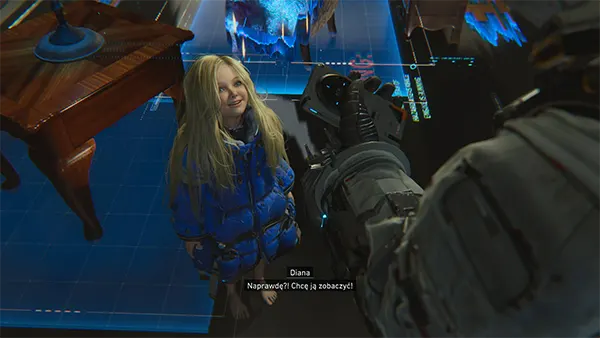
The Shelter also connects mechanical progress with the story of Hugh and Diana. Conversations respond to recent events, while Read Earth Memories can create new rooms, objects and small activities for Diana. Cabin, the Shelter’s assistant bot, introduces challenges, collectibles and a stamp-card system that can unlock further functions, equipment and outfits. Data files add context to the station, and records about hostile bots help explain what the pair is facing. These features give the safe area a different emotional temperature from the cold corridors outside. Time spent there is not only preparation for another fight; it shows Diana learning about Earth and Hugh becoming more than the person carrying her through danger. That distinction matters because the central combat mechanic could otherwise feel purely functional. In the Shelter, the partnership develops through conversation and shared routine. When the pair returns to the Cradle, their cooperation has greater weight because the player has seen what they are trying to protect as well as what they are trying to escape.
Why Upgrades Change Both Fighting Style and Overall Progress
PRAGMATA’s upgrade structure avoids a simple climb from weak equipment to obviously superior equipment. New weapons and nodes widen the number of workable combinations, allowing the player to approach the same type of enemy in different ways. Decode can prepare a heavily armoured target for Hugh’s strongest close-range weapon. Multi-Hack can spread that weakness across a group, making one carefully planned panel route more valuable than several separate attempts. A tactical unit can create the time needed to reach a useful yellow tile, while a defensive unit can draw attention away during a longer hack. Later improvements let Diana’s actions become faster and more powerful, and a hacking-focused build can eventually deal major damage rather than serving only as support. Shooting remains essential, but the balance is no longer fixed. Progress gives the player control over which half of the partnership takes the lead in a particular encounter.
This freedom also changes resource management. Hacking Nodes are limited during a trip, and most weapons outside the Primary Unit are lost when their ammunition is exhausted. The Shelter can replenish supplies, and replacement items can be found in the station, so the system is not built around severe scarcity. Its purpose is to make timing meaningful. Using a powerful node against a weak bot may save health now but leave fewer options for a boss. Holding every resource for later can make ordinary rooms unnecessarily dangerous. The best choice depends on the route, the nearest Tram entrance and the player’s confidence with the basic hacking sequence. This creates a natural difference between cautious and aggressive play without forcing either style. One player may return to the Shelter frequently and tailor the loadout for each district. Another may continue deeper, relying on movement and the Primary Unit until a valuable opportunity justifies spending a specialised tool.
Because abilities affect both combat and access, character growth changes how the station is read. An upgrade that extends an armour opening can turn a previously exhausting enemy into a manageable obstacle. A newly unlocked node may make groups less threatening, encouraging a route through a crowded district that was avoided earlier. Better movement and expanded security access can connect distant sections, shorten repeat journeys and reveal places that once appeared unreachable. The practical effect is that progression takes place on three levels at once. Hugh and Diana gain stronger tools, the player gains a broader understanding of how those tools interact, and the Cradle becomes more navigable as new links appear. This layered development keeps the hacking-and-shooting idea relevant beyond the opening hours. It is not a novelty attached to combat. It is the method through which the game measures readiness, opens routes and turns an unfamiliar lunar complex into a space the player can gradually control.
What the Combined System Means for the Full Lunar Journey
The most important result of the combined design is that action and problem-solving no longer occupy separate parts of the game. The Hacking Panel is a puzzle, but it appears while Hugh is under pressure. Gunfire is immediate, but it is most effective after Diana has altered the target. Environmental access requires a digital solution, yet Hugh still has to reach the correct place and survive the machines guarding it. Each system gains meaning from the other. This produces a clear identity for PRAGMATA without demanding specialist knowledge from the player. The panel uses an understandable line-drawing rule, weapons have recognisable roles and upgrades explain their effect through visible changes in battle. Complexity comes from combining simple actions under pressure, not from memorising a large collection of obscure commands. That makes the game approachable while leaving enough room for skilled players to optimise routes, node combinations and attack timing.
The lunar setting strengthens this structure because isolation makes cooperation unavoidable. Hugh is injured, separated from his team and dependent on Diana’s access to the Cradle. Diana has exceptional control over machines and security, but she needs Hugh’s mobility, protection and judgement. Their mechanical dependence mirrors the story before either character fully understands the other. The station’s silence, artificial districts and failed research systems create a place where human strength alone is insufficient and machine intelligence alone cannot provide safety. Every opened door and defeated bot reinforces the same idea: progress happens when the pair shares the task. The Shelter then gives that repeated cooperation a personal context through conversations and memories of Earth. The result is a journey in which the central relationship is expressed through what the player does, not only through cutscenes. The bond is present in movement, targeting, hacking, upgrading and the decision to keep going through another dangerous sector.
By 2026, PRAGMATA stands as a full example of how one strong mechanical idea can organise an entire action adventure. Shooting supplies force and immediate defence. Hacking creates access, exposes weaknesses and changes the behaviour of threats. The Cradle tests both abilities through enemies, locked systems, interrupted routes and areas that become useful only after the pair has grown. The Shelter converts gathered materials and found designs into practical choices for the next expedition, while also giving Hugh and Diana room to develop as characters. None of these parts works in isolation, which is precisely why the progression feels consistent. The player is not moving through unrelated combat rooms, puzzle rooms and story rooms. Every section returns to the same partnership and asks for a slightly more confident use of it. PRAGMATA’s lunar station becomes manageable not because its dangers disappear, but because Hugh, Diana and the player learn how to connect their abilities with greater speed, purpose and trust.
Popular articles
-
 Star Wars Zero Company: How XCOM-Style Tac...
Star Wars Zero Company takes a very …
-
 OCuLink vs Thunderbolt 5: Which Interface ...
External graphics have become far more relevant …
-
PRAGMATA: How Shooting and Hacking Reshape...
Released on 17 April 2026, PRAGMATA places …