
Steam Frame in 2026: How Valve’s Open CAD Files Allow Users to Modify the VR Headset
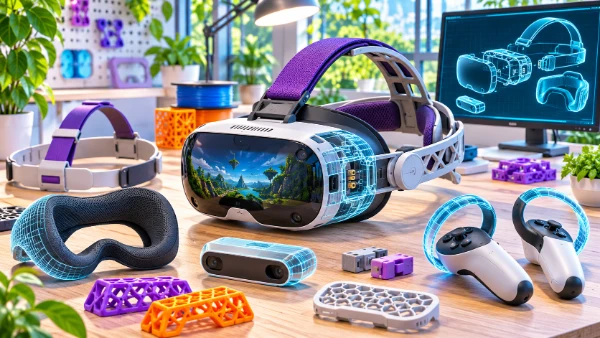
Steam Frame has become one of the most interesting VR hardware releases of 2026, not simply because it supports wireless PC gaming and standalone experiences, but because Valve has made important parts of its physical design available to the public. On 9 October 2026, the company published computer-aided design (CAD) models and electrical reference documents, giving enthusiasts an opportunity to create accessories that match the headset’s actual dimensions. The release covers the main headset module, head strap, controllers and expansion connections, although it does not include every internal component. This approach allows owners to experiment with comfort, fit and additional hardware without designing everything from scratch. It also raises practical questions about what can be modified, which projects are realistic for home users and where Valve’s licensing and warranty restrictions apply.
What Valve Released for Steam Frame in 2026
Valve officially launched Steam Frame on 14 September 2026, with sales beginning later that month. The headset was designed for both PC VR streaming and standalone gaming, combining SteamOS with wireless connectivity and a modular physical structure. Its hardware includes a Snapdragon 8 Gen 3 processor, 16GB of memory, two LCD displays with a resolution of 2160 × 2160 pixels per eye and pancake lenses offering a field of view of up to 110 degrees. The device also supports eye tracking, inside-out positional tracking and refresh rates ranging from 72Hz to 144Hz, with the highest setting described as experimental. These specifications matter for hardware modification because the headset contains several tightly integrated systems that must continue working correctly when accessories are attached.
The October release introduced a collection of engineering references through Valve’s public GitLab repository. Among the available materials are simplified three-dimensional models of the headset’s core module, its head strap and both controllers, together with information about controller tracking LEDs. Valve also supplied documentation covering the front expansion connector and example electrical designs for a USB 3.0 accessory. The mechanical models use the STEP format, which can be opened in compatible CAD applications. Unlike a photograph or a conventional product diagram, a STEP model provides three-dimensional geometry that designers can inspect, measure and use when creating objects intended to fit around existing hardware. The files are particularly valuable when an accessory requires accurate alignment with the headset’s housing or controller surfaces.
There are important limits to the release. Valve describes several models as simplified references rather than complete manufacturing drawings, and the repository does not provide a comprehensive description of every internal assembly. The publicly supplied geometry should therefore not be mistaken for instructions to manufacture an entire Steam Frame headset. Certain replaceable elements, including the facial interface and light-blocking components, are not supplied as separate complete CAD models in the initial collection. Nevertheless, the available references substantially reduce the amount of manual measurement required when developing compatible accessories. Designers can begin with the official dimensions of the main components, check the position of important external features and build prototypes around known shapes instead of relying exclusively on photographs or estimates.
How the CAD Files Work and Where to Find Them
The official starting point is Valve’s Steam Hardware announcement dated 9 October 2026, titled “Steam Frame updates: Reservation timing, software updates, and more”. Its CAD and electrical interface section links directly to the public repository. Anyone interested in developing an accessory should obtain the files through that announcement and read the accompanying README and licence before making changes. The available materials include STEP models for the core headset module, head strap and controller assemblies, while other documents describe tracking LED positions and the expansion connector. The repository also includes electrical reference designs in Altium and KiCad formats. These additional files are intended for people developing electronic accessories and are not necessary for simple projects such as protective covers or custom mounting brackets.
Working with the mechanical models does not require an industrial workshop. FreeCAD, for example, is an open-source application capable of importing STEP files and creating additional three-dimensional components. A designer can load the headset model, examine its dimensions and produce a separate part shaped to fit an accessible mounting area. The resulting design can then be exported into a suitable format for 3D printing or another manufacturing process. An important distinction is that Valve’s supplied STEP files are reference geometry, not necessarily finished objects ready to print. They provide information about existing components, while the user must still create the new accessory, select appropriate materials and check whether its construction is strong enough for everyday use.
A practical development process begins with a small modification rather than a complete replacement of the headset’s structure. For instance, someone creating a custom cable guide can first identify a suitable attachment point in the CAD model, design a lightweight holder and produce a basic prototype. The first version should be tested for physical fit without forcing it into position or placing pressure on the headset. The designer can then adjust the dimensions and repeat the test until the accessory fits securely. It is also necessary to check that the finished part does not obstruct tracking cameras, ventilation, controls or connectors. Valve’s reference files make this process more accurate, but successful CAD modelling alone does not establish that a modification is comfortable, durable or safe.
How Owners Can Change the Steam Frame Headset Design
Steam Frame was developed with a modular head strap, making comfort-related accessories one of the clearest opportunities for modification. Valve lists the headset’s complete weight, including its standard strap, at approximately 440 grams, while the core module itself weighs around 185 grams. The original strap accounts for approximately 245 grams and contains the rear-mounted battery and integrated audio drivers. This arrangement distributes part of the weight away from the front of the face, but it also means that replacing the strap is more complicated than swapping a simple fabric band. An alternative design must consider support, balance and the electrical functions incorporated into Valve’s original assembly. The published geometry provides a useful starting point for developing compatible attachment systems without assuming that every existing third-party strap will fit.
Another area of interest is the facial interface, which determines how the headset rests against the forehead, cheeks and nose. Facial proportions vary considerably, so a fixed design cannot provide an identical fit for every owner. Custom interface frames, spacers and removable padding arrangements could help address pressure points or accommodate different face shapes. Users who wear spectacles may also be interested in alternatives that provide additional clearance between their glasses and the headset. Valve specifies a target interpupillary distance range of 60–70mm and a maximum glasses width of 140mm, providing useful reference information for assessing physical compatibility. However, additional spacing can change the user’s viewing position relative to the lenses, potentially affecting the visible field of view, image clarity and comfort.
The controller designs offer a separate category of possible improvements. Steam Frame controllers combine conventional gamepad-style inputs with tracked VR functionality, allowing the same hardware to support different kinds of games. Valve’s published controller references include the main controller shapes, battery doors and related strap components, as well as the positions of infrared tracking LEDs. This information is important for anyone considering alternative grips, protective shells or personalised attachments. A poorly positioned cover could hide the tracking LEDs and interfere with the headset’s ability to identify the controller’s location. Custom accessories therefore need to preserve the relevant tracking areas while leaving buttons, sticks and other controls accessible. A successful modification should improve handling without reducing the reliability of movement tracking.
Custom Straps, 3D-Printed Parts and Practical Modifications
A custom head strap is a useful example of how Valve’s design references can support different physical requirements. Some owners may prefer a broader rear support, while others may want a different adjustment mechanism or a more compact arrangement for storage. The official CAD model helps designers understand how the strap connects to the headset, but it does not automatically solve the challenge of relocating the original battery and audio equipment. A replacement that removes the rear battery would require an appropriate alternative power arrangement and should not be attempted without understanding the relevant electrical and safety requirements. For most home projects, a less intrusive option is to develop an accessory that works with the existing strap, such as an additional support pad or a detachable comfort component.
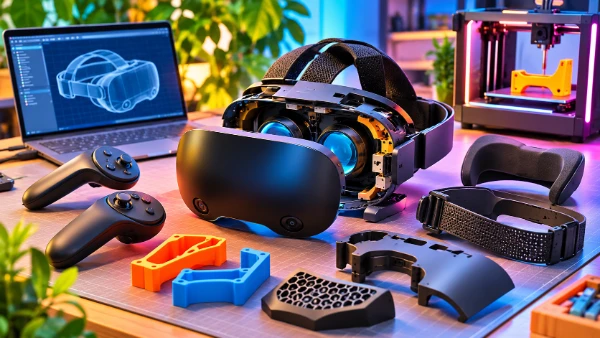
3D printing is particularly suitable for early prototypes because it allows individual parts to be produced and adjusted without expensive manufacturing equipment. Possible projects include storage stands, protective transport inserts, controller holders, removable cable organisers and custom brackets for accessories that do not interfere with the headset’s sensors. The choice of material matters as much as the model’s dimensions. A rigid plastic component may be acceptable for a desktop stand but uncomfortable against the skin, while a flexible material might work better for certain cushioning supports. Components exposed to continuous movement also require sufficient strength around attachment points. Printed parts should be inspected for sharp edges, weak layers and excessive pressure on the original housing before they are used regularly.
Not every useful modification needs to attach directly to the headset. Valve’s dimensional references can also help owners create fitted storage solutions, desk organisers and protective cases that accommodate the shape of Steam Frame and its controllers. These projects generally present fewer risks than electrical modifications or changes to components near the eyes. They also provide a sensible introduction for people learning CAD software. More demanding projects, such as replacement interface frames, should be approached through repeated measurements and controlled fitting tests. The primary advantage of Valve’s release is not that every accessory can be produced immediately, but that designers have a reliable geometric reference from which to develop and improve their own products.
Expansion Port, Licensing and the Future of Steam Frame Modding
Mechanical changes are only part of Steam Frame’s customisation potential. The headset includes a user-accessible front expansion connector designed to support additional hardware. Valve’s published specifications describe a high-speed camera interface and a single PCI Express Gen 4 lane, allowing more ambitious accessory concepts than a conventional passive mounting bracket. The October documentation provides further information about the connector’s electrical arrangement and includes reference designs for USB 3.0 hubs. These resources could support development work involving additional cameras or specialised external hardware, although compatibility depends on the accessory’s electrical design and software support. The presence of a documented connector should not be interpreted as a guarantee that any device can be plugged in and used immediately.
Power consumption creates another practical limitation. Steam Frame uses a rechargeable 21.6Wh battery, and additional electronics draw from an already limited supply of energy. Valve’s expansion documentation describes a continuous accessory power allowance of approximately 6 watts, a substantial demand for a battery-powered VR headset. Hardware operating near that limit could noticeably reduce playing time, depending on the activity and the headset’s own consumption. Designers must also account for heat, physical clearance and the way an attached device affects the headset’s balance. Valve’s reference examples are useful for understanding the connector, but they are not finished consumer accessories. In particular, the company cautions against using its rigidly connected KiCad example as a final hardware design because of the mechanical stress it could place on the expansion port.
Valve has also established clear conditions for using the released design materials. The public files are distributed under the Creative Commons Attribution-NonCommercial-ShareAlike 4.0 licence, which permits copying, adapting and sharing the material for non-commercial purposes under specified conditions. Users must provide appropriate attribution, indicate changes and follow the licence’s requirements when distributing adaptations. Commercial projects require a separate arrangement with Valve rather than automatic permission to manufacture and sell products based on the released files. Warranty restrictions are equally important: Valve warns that opening the device’s outer enclosure or attaching hardware that is not recognised as Steam Frame Compatible to its electrical interface ports can void warranty coverage. Publishing engineering information therefore does not mean that Valve has approved every possible modification.
What Open Hardware Means for Steam Frame Owners and Developers
The release creates opportunities for hobbyists, independent accessory designers and small development teams, but those opportunities differ in complexity. A home user with basic CAD knowledge may be able to design a personal headset stand or controller grip using the mechanical references. Someone developing a different head strap needs a stronger understanding of physical fit, weight distribution and the relationship between the strap and the headset’s integrated electronics. Electrical projects require considerably more expertise because mistakes can damage connectors or other components. Valve’s approach helps each group by making reference information publicly available, while leaving responsibility for design, testing and safe construction with the person creating the modification.
The decision also fits Valve’s wider history of supporting hardware experimentation. The company previously published CAD resources for Valve Index and Steam Deck, and in 2026 it made additional reference material available for newer Steam hardware. This continuity matters because a publicly documented physical design can support accessory development beyond the manufacturer’s initial range of products. Owners may eventually benefit from a wider selection of straps, protective parts, stands and other improvements designed around different preferences. However, the existence of public CAD files does not guarantee that third-party accessories will reach the market. Commercial licensing, manufacturing costs, quality control, demand and the availability of compatible parts will influence which ideas become finished products.
For Steam Frame owners in 2026, the most immediate benefit is greater freedom to develop accessories around officially documented shapes rather than relying on guesswork. The CAD release provides a practical foundation for mechanical projects, while the expansion-port documentation opens a more specialised route for electronic development. Both possibilities come with limitations: simplified models cannot replace full engineering specifications, and unauthorised electrical modifications may introduce reliability and warranty risks. Steam Frame’s modular construction and publicly accessible references nevertheless give its users more room to personalise the physical hardware. The long-term value of this approach will depend on how carefully designers use the information and whether their creations offer measurable improvements in comfort, usability or functionality.
Popular articles
-
Steam Frame in 2026: How Valve’s Ope...
Steam Frame has become one of the …
-
 Star Wars Zero Company: How XCOM-Style Tac...
Star Wars Zero Company takes a very …
-
 OCuLink vs Thunderbolt 5: Which Interface ...
External graphics have become far more relevant …